
Here is something a lot of people don't know. Barbara Walters grew up lonely. Her father's nightclub business kept the family moving constantly between Boston, Miami, and New York, which meant new schools, new neighborhoods, and very few lasting friendships. Her brother died before she was born. Her sister Jacqueline had an intellectual disability and was Barbara''s closest companion growing up, often her only one. This is a part of her story that often gets skipped over and it might be the most important part. There are many connections that can be drawn between the emotional weight of Walters' early life directly to the patience and attentiveness that made her extraordinary at her job later on.
She wrote about Jacqueline in her 2008 memoir Audition, saying here sister was the person who taught her what it really meant to pay attention to someone. Think about that in the context of her career. The women who got Fidel Castro, Monica Lewinsky, and Katharine Hepburn to open up the camera learned to listen by sitting with a sister the world mostly ignored. That is not a small thing.

She graduated from Sarah Lawrence College with a degree in English and no obvious path into the industry she wanted. Women did not anchor the news in the early 1950s. So she started from the bottom, working as a secretary and then a writer at a local New York TV station before landing at NBC. Judith Marlane's research on women in television journalism puts this era plainly, women were allowed to e seen on screen, but they were not allowed to have real authority. Walters figured out how to work inside that system while quietly building her way out of it.
She made every soft segment sharper. She pitched harder stories. She just kept going until the people around her forgot to treat her like a limitation.
By 1961 she was on the Today Show, but only in the "Today Girl" role, which was exactly as decorative as it sounds. Held by models and actresses like, Florence Henderson, Beryl Pfizer, Robbin Bain, Louise King, Pat Fontaine, and Maureen O'Sullivan. Walters was able to turn this into a training ground anyway. She got better at interviews, pushed for harder assignments, and by 1974 was co-host of Today. She was one of the first women to hold that title on a national morning program. Her rise was not about luck or timing. It was about outlasting a system that was not built for her.
Then 1976 happened.
ABC hired her co-anchor of the evening news at one million dollars a year, making her the first woman to anchor a network evening newscast and the highest-paid broadcaster in the country. Her co-anchor Harry Reasoner was openly hostile and disrespectful to her on air. Critics were dismissive and while all of that was happening she flew to Egypt and Israel in 1977 and sat down with Anwar Sadat and Menachem Begin TOGETHER, weeks before their historic peace agreement. That interview alone would have defined most careers.
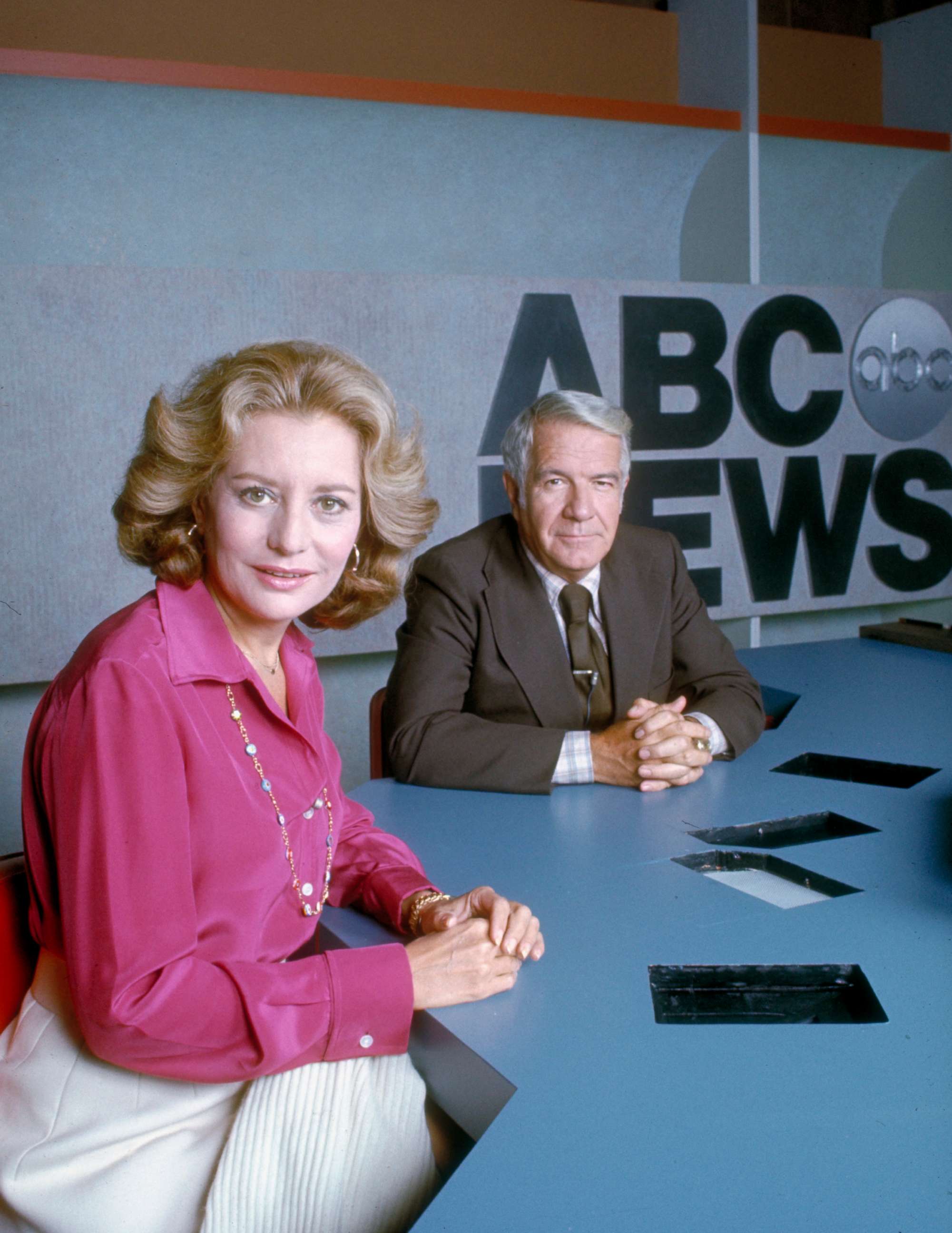
She went on to interview every sitting U.S. President and First Lady from Nixon to Obama, conduct the first American TV interview with Fidel Castro, and draw 74 million viewers for her 1999 Monica Lewinsky interview. She created The View in 1997, produced it, and owned it. It was not a side project. It was a genuine format innovation that changed how political conversation reaches everyday audiences.
She retired in 2014 and passed away on December 30, 2022 at the age of 93. What I keep coming back is the idea that a kid moved constantly, who had no stale social world, who learned to really listen because her sister needed her. Everything in her life especially her early years shaped the person she was able to become. She inspired and paved the way for many women today all over America. Changing the standards and raising the bar.
AI disclaimer: I used claude.ai to help me find sources/articles and write the presentation I gave in class. Which inspired this blog post.


No comments:
Post a Comment